You’ve stood in a drugstore aisle holding two mascaras — both claiming “10x volume” — with no real way to evaluate which one delivers. That frustration is a predictable outcome of a market where volume claims have no standardized definition and no regulatory body enforcing accuracy. A $5 formula and a $35 one can perform nearly identically, or the opposite, depending on factors the packaging never discloses.
What actually drives mascara volume: formula wax concentration, pigment density, polymer suspension, and brush geometry. And above all of those — application technique, which most buyers never learn and most reviews never teach.
This covers Rimmel Volume Shake in full competitive context: how the dual-phase formula works, where it outperforms same-price competitors, and the specific conditions under which a different formula would serve you better. Before committing to any single mascara, comparing at least two to three options against your specific lash type and daily wear conditions is the only way to make a sound purchase decision.
What Mascara Formulas Are Actually Selling You
Three variables drive real volume — not marketing language, not stylized brush photography on the packaging:
- Wax-to-water ratio. Waxes — beeswax, carnauba, paraffin — are the film-forming agents that coat each lash. Budget mascaras typically contain 10–18% wax by weight. Premium formulas reach 25–30%. Higher wax concentration means more deposited material per stroke, which is the physical mechanism behind visible thickness.
- Pigment density. Black iron oxide is the standard colorant. Mascaras with lower pigment loads require more coats to reach full color saturation. Each additional coat adds weight — and more weight means higher clumping risk.
- Polymer suspension system. This determines how long the formula holds its shape post-application. Weaker polymer systems migrate under humidity. Stronger systems hold the curl and resist smudging, but typically require oil-based removal — a daily trade-off worth factoring in.
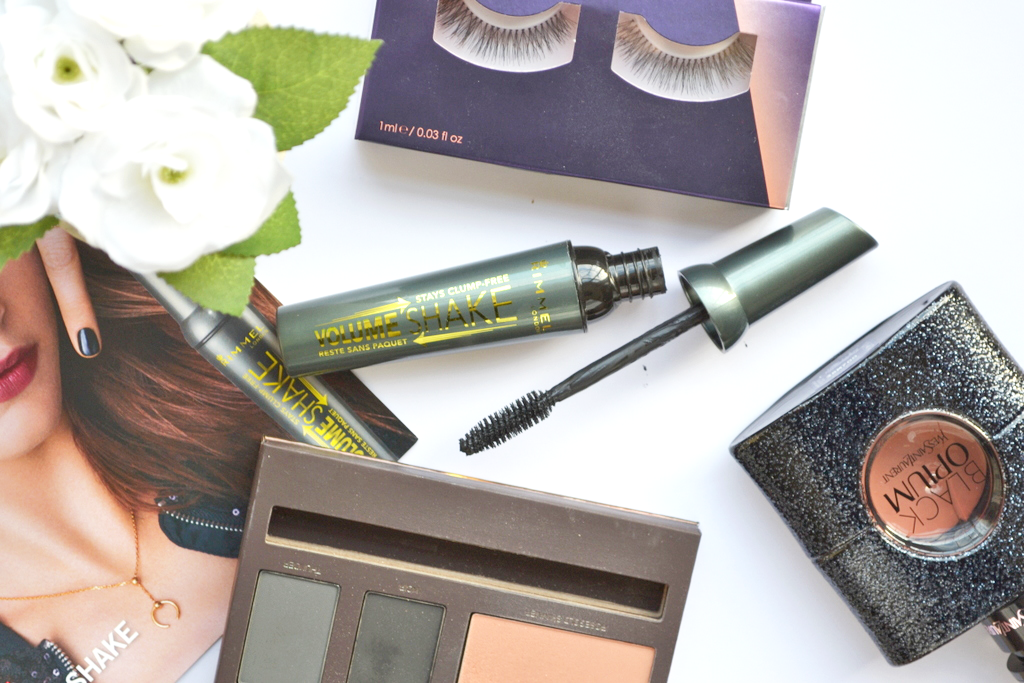
Rimmel Volume Shake uses a dual-phase formula that separates into two distinct layers on standing and must be recombined by shaking the tube before each application. This design allows a higher concentration of volumizing polymers than a standard single-phase emulsion can hold in stable suspension. The heavier volumizing base and the lighter conditioning layer, when properly combined, coat lashes with more material than conventional formulas while maintaining post-application flexibility.
The practical implication: skipping the shake means applying an incompletely combined formula. A significant portion of consumer complaints about Volume Shake’s inconsistency traces directly to this step. The shake is not optional — it is the product.
Brush Geometry Shapes Results as Much as Formula
Volume Shake’s brush head is approximately 12mm in diameter — wider than Maybelline Sky High’s flexible 9mm brush and comparable to L’Oreal Voluminous Original’s classic cylindrical head. A wider brush deposits more product per stroke across more lashes simultaneously and makes root application considerably easier. Root-concentrated product creates the visual impression of density. Tip-concentrated product creates length. These are different outcomes, even from the same formula.
Results Vary by Lash Type and Ambient Humidity
Consumer wear data consistently shows Volume Shake’s performance shifts materially based on two external factors: natural lash density and relative humidity. On medium-density natural lashes in a controlled indoor environment — office, indoor social settings — Volume Shake delivers measurable volume reliably. On short, sparse lashes in conditions above 75% humidity, results fall well below the formula’s potential. Know your conditions before locking in any single mascara formula.
The Five-Step Method That Maximizes Volume From Any Formula
Technique determines a larger percentage of the final result than mascara marketing prefers you to believe. The same formula applied incorrectly produces clumping, smearing, or minimal volume gain. Applied correctly, an $8 drugstore mascara regularly outperforms a $35 department store option. These five steps apply regardless of which formula you’re using — but they’re specifically what unlocks Volume Shake’s dual-phase system.
- Start with clean, dry lashes. Residual oil or face moisturizer at the lash line degrades adhesion and shortens wear time. Before application, press a clean dry tissue gently against the lash root. Ten seconds of prep. Do it every time.
- Curl before coating, not after. A lash curler on bare lashes — 20–30 seconds of firm pressure at the root, then pulse twice toward the mid-shaft — creates a curl the mascara film then locks in place. Curling over dry mascara cracks the film. That cracking is the cause of the mid-day flaking most people attribute to a bad formula.
- Wiggle from the root upward. Insert the brush as close to the lash root as possible without touching skin and move it side-to-side before pulling upward. This deposits maximum product at the base, where density originates visually. Pulling straight through from root to tip distributes product evenly — a lengthening technique, not a volumizing one.
- Apply two thin coats with a 30-second pause between them. Let the first coat begin setting before the second. A single heavy coat clumps. Two thin coats build the same total coverage with far less adhesion failure between lashes.
- Use only the brush tip on lower lashes. Turn the brush vertically and touch just the tip to lower lashes. The full brush is too wide for most eye shapes and is the primary source of under-eye smearing — a smearing problem that gets blamed on the formula rather than the technique.
Volume Shake’s 12mm brush makes the wiggle step notably more efficient than thin flexible brushes. The wider head covers more lash surface per stroke, so the side-to-side motion deposits product across more lashes per pass. Testing the same technique with Maybelline Sky High’s finer brush requires more passes to reach equivalent root coverage, which raises the risk of overloading.
The dual-phase formula rewards the two-coat approach directly. The first coat deposits the heavier volumizing phase. Reshaking the tube before the second application — and waiting the full 30 seconds — allows the conditioning layer to apply cleanly over the base. Skip the inter-coat wait and you lose the structural benefit the dual-phase system is engineered to produce.
Rimmel Volume Shake vs. Four Competing Mascaras
Performance comparisons need specific reference points. These four mascaras span the realistic consideration set for a buyer evaluating Volume Shake at its ~$9 price:
| Mascara | Price | Formula | Brush | Primary Strength | Humidity Resistance |
|---|---|---|---|---|---|
| Rimmel Volume Shake | ~$9 | Dual-phase shake | Wide rounded, 12mm | Buildable volume | Moderate — smudges at 80%+ humidity after ~4 hrs |
| Maybelline Sky High | ~$11 | Single-phase lengthening | Flexible thin, 9mm | Length + separation | High — holds 8+ hrs in moderate conditions |
| Essence Lash Princess False Lash | ~$5 | Fiber-infused | Dense conical | Drama on sparse lashes | Low — migrates within 3–4 hrs |
| L’Oreal Voluminous Original | ~$9 | Classic film-forming | Classic cylindrical | Consistent all-round volume | Moderate — similar to Volume Shake |
| Charlotte Tilbury Legendary Lashes Vol. 2 | ~$30 | Keratin-infused | Tapered precision | Volume with built-in separation | High — holds through most conditions |
Volume Shake vs. L’Oreal Voluminous Original: The Direct Match
Same price, same category, same target buyer. The gap comes down to brush design and color payoff. L’Oreal Voluminous uses a classic cylindrical brush that applies product consistently but offers less root-deposit control during the wiggle technique. Volume Shake’s rounded head gives more surface area contact at the lash root per stroke. For buyers with developed application technique, Volume Shake builds marginally more density. For beginners, Voluminous is more forgiving — harder to overload.
When Essence Lash Princess Outperforms at $5
On short, sparse lashes, Essence Lash Princess False Lash produces more visually dramatic results than Volume Shake. The fiber formula physically extends lash tips beyond what a coating-only formula can achieve. Volume Shake builds density on lashes that already have some natural mass. It doesn’t extend. If your primary concern is sparseness rather than wanting more volume on existing lashes, Lash Princess at $5 is the more precise solution for that specific problem.
What the Charlotte Tilbury Premium Buys You
Charlotte Tilbury Legendary Lashes Vol. 2 at $30 justifies its price in one specific measurable way: the tapered brush produces both volumizing coverage and natural lash separation without a post-application comb step. Volume Shake after two coats typically needs a clean spoolie run through. If that extra step is inconvenient, the $21 gap is a legitimate trade-off to evaluate. If it isn’t, save the money.
Rimmel Volume Shake: Full Performance Breakdown
The dual-phase formula delivers on its design — consistently — when the shake step is executed. Apply within 10 seconds of shaking. The phases begin separating again once agitation stops, and waiting more than 30 seconds reduces the formula’s volumizing performance in a way you can see in the final result.
Wear Performance Across Conditions
Color payoff is Volume Shake’s strongest measurable attribute. Both the Black and Very Black shades reach full saturation by the second coat. Many budget single-phase formulas require a third coat to achieve comparable opacity — each extra coat adds mass and clumping risk. Reaching full color depth from coat two means less total product weight on the lash.
Setting time runs approximately 45–60 seconds to a film-flexible state. The formula doesn’t dry brittle, which matters: rigid films flake at stress points — typically the outer corners — within two hours under warm conditions. Volume Shake’s flexible film avoids this for most climate-controlled wear scenarios.
In standard indoor conditions — consistent temperature, humidity in the 40–60% range — the formula holds 8–10 hours without significant migration. Curl retention remains visible at the 6-hour mark on lashes that were properly curled before application.
In high-humidity conditions above 80% — outdoor summer heat, exercise, coastal weather — under-eye smudging begins around the 4-hour mark. This is a real limitation worth stating plainly: Volume Shake is not humidity-resistant. Maybelline Sky High holds under the same conditions because its polymer system is engineered for higher water resistance. For gym sessions, beach days, or any outdoor summer event, the Maybelline Lash Sensational Sky High Waterproof at approximately $12 is the better-matched formula. Purchasing Volume Shake for high-humidity wear is the most common buyer mistake with this product.
Brush Fit Across Eye Shapes
The 12mm brush width creates a precision challenge on smaller or close-set eye shapes. Inner corner lashes require careful placement to avoid transferring product to the lower lid skin. A clean angled brush or small pointed spoolie handles inner corner detail better than the Volume Shake brush alone. Not a disqualifying issue — a tool limitation worth knowing before your first application.
Removal is clean. The water-based formula dissolves with micellar water or a gentle cleanser. For anyone who has experienced lash thinning from repeated oil-based removal of waterproof formulas, this is a genuine practical advantage — and one reason Volume Shake makes sense as an everyday non-waterproof option paired with a separate waterproof formula for high-stakes occasions.
The Verdict
For medium natural lashes in controlled indoor conditions, Rimmel Volume Shake at ~$9 outperforms L’Oreal Voluminous Original at the same price — stronger brush geometry, better color payoff from coat two, and a dual-phase system that genuinely builds density when used correctly. It underperforms above 80% humidity, it doesn’t extend sparse lashes the way Essence Lash Princess does at $5, and it needs a comb after two coats. Those are the specific disqualifying conditions. Outside of them, and with the shake executed every single time, Volume Shake is the better buy at its price point.