If you’ve ever tried to master the perfect chocolate drip icing and ended up with a runny mess or hard, clumpy drips, you’re not alone. Getting that velvety, glossy chocolate ganache drip just right can transform any cake from ordinary to stunning—and it all comes down to the right ratios, temperature, and application technique. In this guide, you’ll learn the precise formulas and insider tips to nail that flawless drip every time. Ready to elevate your baking game and create show-stopping drip cakes that impress? Let’s get started.
The Science of the Ganache: Ingredients Matter
When it comes to perfect chocolate drip icing, the ingredients you pick make all the difference. Let’s break down what you need to know:
Chocolate Selection: Couverture vs. Compound Chocolate
- Couverture chocolate is the gold standard for a glossy, fluid drip. It has a higher cocoa butter content, making it melt smoothly and flow beautifully.
- On the other hand, compound chocolate contains vegetable fats instead of cocoa butter, which can lead to a less shiny, thicker, and sometimes grainy finish. Avoid candy melts if you’re aiming for that velvety, elegant drip.
Chips vs. Bars: Why Bars Win
- Using chopped chocolate bars rather than chocolate chips gives you a smoother, more even melt. Chips often have stabilizers to keep their shape, which can compromise your ganache’s fluidity and shine.
The Liquid Component: Heavy Cream is King
- Heavy cream (or double cream) is the classic partner for ganache. Its rich fat content blends perfectly with chocolate to create that luscious, velvety texture home bakers crave.
Dairy-Free Alternatives for Inclusivity
- For a dairy-free option, swap heavy cream with full-fat coconut cream. It emulsifies well and offers a hint of tropical flavor that still yields a deliciously smooth drip.
- Alternatively, a water-based ganache (using water instead of cream) works for a lighter drip but requires precise ratios to avoid graininess.
Focus on these basics, and your ganache will naturally reach that perfect glossy fluidity that’s essential for stunning cake decorating techniques.
The Golden Ratios for Perfect Chocolate Drip Icing
Getting the chocolate ganache ratios right is the heart of a flawless drip icing. Here’s a quick guide to the classic proportions that work best with different chocolates:
- Dark/Semi-Sweet Chocolate: Stick to the classic 1:1 ratio of chocolate to heavy whipping cream. This balance gives a rich, glossy finish with the right drip consistency.
- Milk Chocolate: Because milk chocolate contains more sugar and milk solids, you’ll want to reduce the cream. A ratio of about 3:1 or 2.5:1 chocolate to cream helps maintain thickness while keeping a smooth flow.
- White Chocolate: White chocolate drips are the trickiest due to their composition. Aim for a higher chocolate to cream ratio — around 3:1 or even 4:1 — to avoid a runny ganache. This thicker mix holds drips better and keeps them neat.
Coloring White Chocolate Drip
If you’re adding color to white chocolate, use oil-based candy colors or gel food coloring. Water-based colors can cause the ganache to seize up and become grainy, ruining the smooth texture. For reliable results, gently fold in colors and avoid overheating.
Understanding these chocolate ganache ratios makes all the difference in achieving that perfect drip cake effect, whether you’re using semi-sweet chocolate or working on a delicate white chocolate drip. For a solid base recipe to try out these ratios, you might find this classic dark chocolate cheesecake recipe useful for inspiration and texture.
The Preparation Process for Chocolate Drip Icing
Getting the ganache ready right is key to a flawless chocolate drip. Start with the heating method: You can either scald your cream (heat it just to a simmer) and pour it over your chopped chocolate or use short microwave bursts to warm both ingredients gently. The scald and pour method gives you more control over temperature, while the microwave method is quicker but demands careful monitoring to prevent overheating.
Next is emulsification—stir your mixture gently but thoroughly to blend the chocolate and cream into a smooth, shiny ganache without introducing air bubbles that can ruin the drip’s look. Use a spatula in slow, circular motions, scraping the sides of your bowl.
Finally, for that glass-like smoothness, pour your ganache through a fine sieve before use. Straining catches any lumps or undissolved bits, ensuring your drip icing looks silky and flawless on the cake.
Mastering these steps transforms your chocolate ganache ratios and technique into a glossy finish every time. For more tips on smooth, flawless finishes, you might find cake decorating techniques articles insightful.
Temperature and Consistency: The ‘Test Drip’
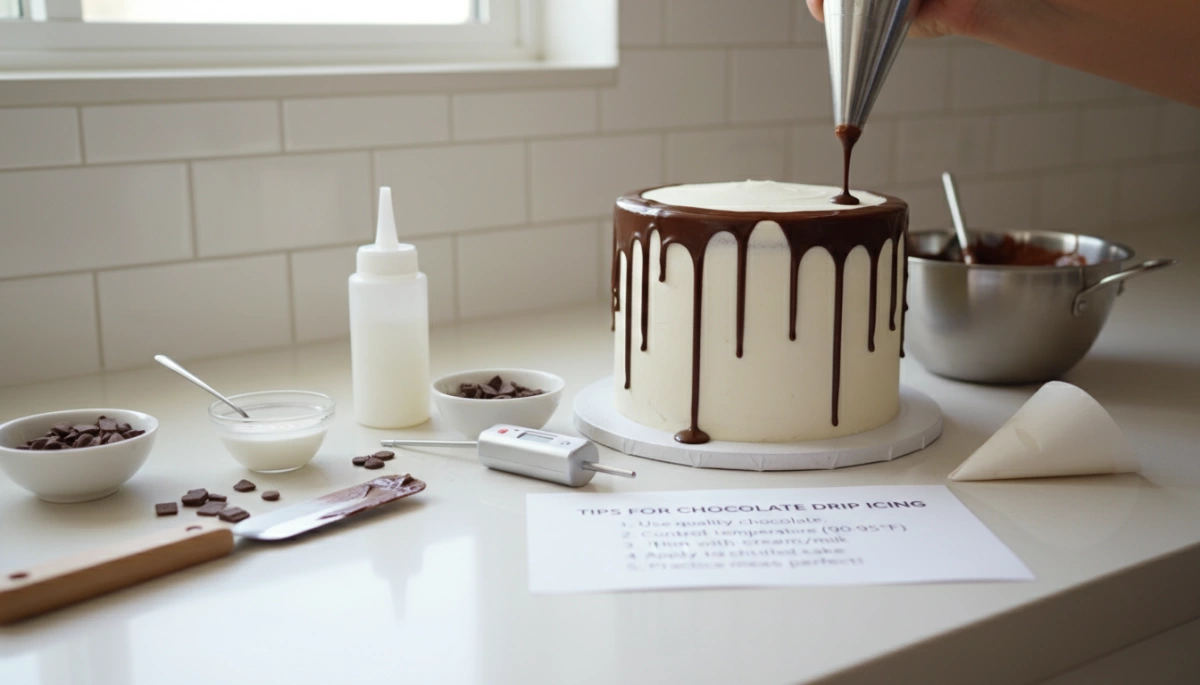
Getting the temperature and consistency right is key to perfect chocolate drip icing. The sweet spot for ganache is around 90°F (32°C) — warm enough to flow smoothly but cool enough to hold its shape once on the cake.
Before you start, do a simple spoon test: dip a spoon into the ganache and hold it over the bowl. The ganache should drip off slowly in a steady, glossy stream. If it’s breaking or running off too fast, you’ll want to adjust.
Troubleshooting consistency:
- Too thick: Warm cream added slowly, teaspoon by teaspoon, can loosen it up without losing shine.
- Too thin: Melted chocolate added bit by bit will firm up the ganache for better control.
Finding the right flow ensures a flawless, shiny finish that clings perfectly to the chilled buttercream or ganache base. This small test saves you from drip disasters on your cake!
Preparing the Canvas (The Cake)
Before applying your chocolate drip icing, prepping the cake properly is key. The chill factor can’t be overstated: a cold cake with a chilled buttercream or ganache base (about 20-30 minutes in the fridge) is essential. This cool surface helps the drip set quickly and prevents it from sliding off, giving you that clean, controlled effect every time.
Also, pay attention to the surface texture. Aim for a sharp top edge and smooth sides to create a perfect drip canvas. A neatly crumb-coated, smooth buttercream or ganache layer ensures the chocolate glide looks glossy and professional.
For more about achieving the perfect base for your decorating projects, check out this baking tips guide which shares helpful tricks on cake prepping and icing techniques.
Application Techniques for Chocolate Drip Icing
Mastering drip cake decorating techniques starts with choosing the right application method for your needs and skill level.
- Spoon Method: Perfect for beginners wanting a rustic, hands-on touch. Simply dip a spoon into your ganache and gently drip it along the cake’s edge. You control the drip length by adjusting the amount of ganache and how much pressure you apply. It’s easy and forgiving, great for small batches.
- Squeeze Bottle Method: Ideal for precision and speed, especially if you’re doing multiple cakes or want uniform drips. Fill a clean squeeze bottle with your chocolate ganache, then carefully squeeze to create consistent drips around the edge. This method offers great control over drip size and flow.
- Piping Bag Method: Best suited for large volumes when decorating multiple cakes at once. Use a piping bag fitted with a plain round tip, allowing you to pipe drips steadily. It’s efficient but requires a steady hand for smooth execution.
Step-By-Step Execution
- Start with drips on the edge: Using your chosen tool, apply the ganache around the cake’s edge first. Control the drip length by how hard you press or how much ganache you spoon on.
- Fill in the center last: Once the drips are set, pour ganache over the center of the cake and smooth it out with an offset spatula for a glossy finish.
- Smooth the top: Use an offset spatula to carefully even out the top layer of ganache, giving your drip cake a polished look.
By mastering these methods, you can tailor the application for any occasion, ranging from rustic home baking to professional cake decorating.
Troubleshooting Common Drip Cake Disasters
Even with the best chocolate ganache ratios and techniques, you might face issues while working with chocolate drip icing. Here are quick fixes for common problems:
- Elephant Skin: This wrinkling happens when the ganache cools too fast or hits a cold surface. Avoid sudden temperature shocks by letting the drip set at room temperature initially before refrigerating.
- The Puddle: If the ganache runs off the cake onto the board, it’s usually too hot or contains too much cream. Cool your ganache to the ideal 90°F (32°C) and check your liquid ratio. Adding a little more melted chocolate can help firm it up.
- The Crack: Ganache cracking after chilling is a sign it’s too thick or set too cold. To fix, slightly warm the ganache before applying, and ensure your cake’s buttercream base is properly chilled but not icy.
- Seized Chocolate: Grainy or clumpy chocolate ganache can be saved by blending in a small amount of neutral syrup like corn syrup or using a blender to re-emulsify. Avoid water-based colors and always use oil-based gel colors to prevent this issue.
Getting a glossy finish and smooth drip is about balancing temperature and consistency. With a little patience and these troubleshooting tips, your chocolate drip will look just right. For more fine-tuning on techniques like using an offset spatula for smooth edges or decorating with squeeze bottles, exploring expert cake decorating techniques can be a game changer.