
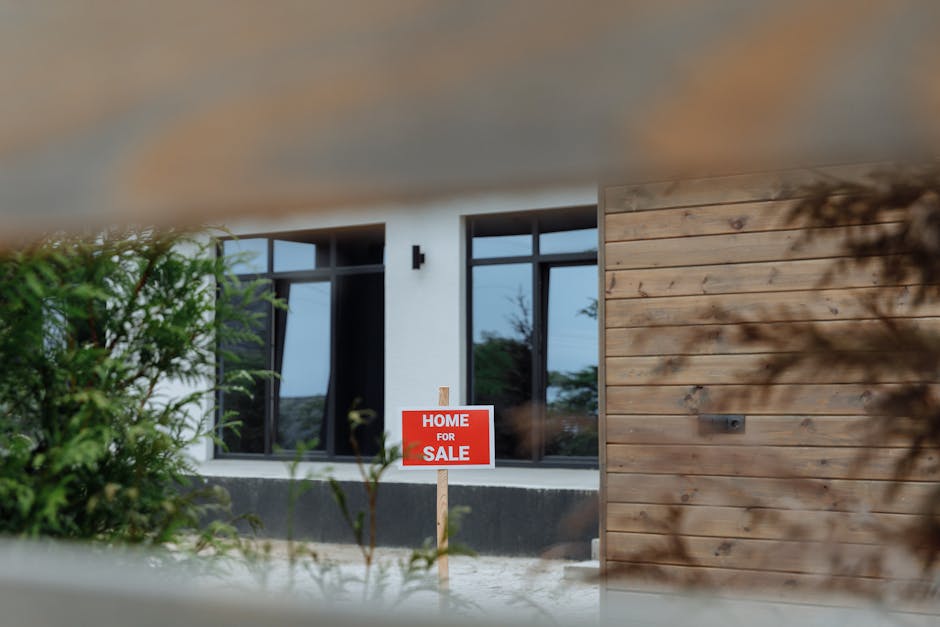
I almost ruined my life in 2019 over a two-bedroom condo in Logan Square, Chicago. I had the 20% down payment saved up—roughly $72,000 that I’d scraped together by living like a monk for five years—and I was convinced that if I didn’t buy right then, I’d be locked out of the market forever. My parents were calling me every week asking if I’d “found a place yet,” as if owning a deed was the only thing standing between me and total social failure.
The inspection happened on a rainy Tuesday. I paid $450 for a guy named Mike to crawl through the crawlspaces. He came out looking like he’d seen a ghost. The HVAC was leaking carbon monoxide, the “recently renovated” deck was literally held up by two-by-fours that weren’t anchored to anything, and there was a black mold colony in the master shower that looked like a science experiment gone wrong. I walked away, lost my inspection fee, and felt like a loser.
But looking back? That $450 was the best money I ever spent. If I had bought that place, I would have been underwater by 2020, stuck in a city I ended up wanting to leave, tethered to a building that needed $40,000 in immediate repairs. We’ve been fed this lie that buying a home is the “safe” move. It’s not. In this market, it’s a massive, concentrated bet on a single asset that can’t move, can’t be easily sold, and demands to be fed money every single month. It’s a liability disguised as an achievement.
The math just doesn’t math anymore
I know people love to talk about “building equity,” but they usually forget to mention the unrecoverable costs. When you rent, your rent is the maximum you will pay for housing that month. When you own, your mortgage is the minimum.
Let’s look at the numbers, because I actually tracked this. I have a buddy, let’s call him Dave, who bought a place in Austin around the same time I decided to keep renting. We both had about $3,200 a month to spend on housing.
- My Rent: $2,600. The other $600 went straight into a boring S&P 500 index fund. If my water heater exploded at 3 AM, I called a guy, and he fixed it. Cost to me: $0.
- Dave’s Mortgage: $2,400. Sounds great, right? But then add $600 in property taxes (Texas is brutal), $150 in insurance, and $100 for the HOA. He’s already at $3,250.
- The Kicker: Last summer, Dave’s AC unit died. In Austin. In July. That was an $8,400 bill. He didn’t have the cash, so he put it on a credit card at 22% interest.
Dave is “building equity,” sure. But he’s also bleeding cash. After four years, my index fund is up 40%. Dave’s house has appreciated, but after you subtract the interest he’s paid to the bank, the property taxes, the new AC, and the 6% commission he’ll have to pay a realtor to sell the damn thing, he’s actually trailing me by about $22,000.
Buying a house is essentially taking out a massive loan to gamble on the local economy of a single neighborhood.
I might be wrong about this—and I know the “real estate always goes up” crowd will scream at me—but I think we’re ignoring the opportunity cost of being stuck. If a better job opens up in Seattle or Tokyo or even just across town, I can leave in thirty days. Dave is stuck until he can find a buyer who isn’t terrified by 7.2% interest rates.
The part nobody talks about (the psychological cage)
There is a specific kind of stress that comes with owning things. What I mean is—actually, let me put it differently. Homeownership isn’t an investment; it’s a high-maintenance hobby that you’re forced to participate in.
I remember visiting Dave last month. We were supposed to go grab beers, but he spent three hours trying to figure out why his backyard fence was leaning. He was stressed, covered in dirt, and had spent $200 at Home Depot on pressure-treated wood. He wasn’t “building a legacy.” He was a slave to a piece of dirt.
Anyway, I digress. The point is that our culture treats renting like it’s “throwing money away.” But you aren’t throwing money away; you are buying optionality. You are buying the right to not care about the roof. You are buying the ability to pivot your life in an afternoon. In a world where the economy changes every five minutes, that flexibility is worth more than a basement that might flood.
I have a confession about real estate agents
I’m going to say something that will probably get me some hate mail, but I genuinely believe that the residential real estate industry is one of the last great rackets. I refuse to use sites like Redfin or work with traditional agents anymore because the incentives are totally broken.
Why am I paying someone 3% of a $500,000 transaction to open a door with a keypad and send me a DocuSign link? It’s absurd. I’ve met exactly one realtor who actually understood how a foundation works. The rest were just glorified Instagram influencers who knew how to use a wide-angle lens to make a closet look like a primary suite. I actively tell my friends to avoid the “buying fever” that these people stoke. They want you to feel the FOMO because that’s how they get paid. They don’t care if you’re house-poor for the next decade.
Total scam.
The “American Dream” is just good marketing
I used to think that owning a home was the finish line. I thought once I had the keys, I’d finally feel like an adult. But then I realized that the “American Dream” was largely constructed by banks and construction companies in the 1950s to keep people predictable. If you have a 30-year mortgage, you’re a very predictable worker. You won’t quit your job. You won’t take risks. You’ll keep paying that interest.
A mortgage is a 30-year anchor made of paperwork and property taxes.
I’ve lived in four different apartments in the last six years. One had a gym, one was right above my favorite coffee shop, and my current one has a view of the park that I could never afford to buy. Each move allowed me to optimize my life for what I needed at that exact moment. When I wanted to focus on my side projects, I moved somewhere quiet. When I wanted to be social, I moved to the city center.
If I had bought that condo in Logan Square, I’d still be there, staring at the same four walls, probably still worrying about that mold in the shower.
So, what should you actually do?
Look, if you have five kids and you plan on living in the same town for twenty years, fine. Buy the house. But if you’re like me—someone who works a “general” job, has a few side hustles, and actually wants to enjoy their life—stop listening to your parents’ outdated advice.
Here is my blunt, non-professional advice for anyone feeling the pressure to buy right now:
- Run the numbers on a rent vs. buy calculator, but add 2% of the home’s value per year for maintenance. Most people forget that part.
- Invest the difference. Don’t just spend the money you save by renting. Put it in the market.
- Value your time. Mowing a lawn is not a “relaxing weekend activity.” It’s unpaid labor.
- Stay mobile. The biggest raises come from changing jobs, and changing jobs is easier when you aren’t tied to a zip code.
I’m not saying I’ll never buy a house. Maybe someday I’ll find a cabin in the woods that I can pay for in cash, or maybe the market will finally crash hard enough that the math makes sense again. But for now? I’m perfectly happy “throwing my money away” on rent. Because what I’m actually buying is my freedom.
Is it weird that I feel more secure with a lease than I ever did with a pre-approval letter? Maybe. But I’ve never slept better.
Anyway, I’ve got a leak in my sink. I’m going to go text my landlord and then go for a walk. Not my problem.