You step out of the shower, realise you’re already 10 minutes late, and face a choice: slather on lotion for 3 minutes or skip it and deal with dry, tight skin all day. Neither option is good.
Body moisturising mists solve that exact problem. They’re a spray-on, no-rub, fast-absorbing alternative to traditional body lotions. But are they actually moisturising enough? Or are they just scented water in a fancy bottle?
What Exactly Is a Body Moisturising Mist — and Why Do People Buy Them?
A body moisturising mist is a lightweight, water-based formula you spray directly onto skin. No pumping, no squeezing, no rubbing in circles for 60 seconds. You spray, wait 10 seconds, and get dressed.
The category exists because traditional body lotions have a real friction problem — literally. They take time to absorb, leave a greasy film, and most people simply don’t use them consistently. A 2026 survey by Mintel found that 42% of women skip body moisturiser at least three times a week because it’s too much effort.
Mists trade some occlusive power for speed and convenience. They use humectants like glycerin and propylene glycol to pull water into the skin, plus a small amount of emollients (usually oils or esters) to soften the surface. They won’t lock in moisture as long as a thick cream, but they’re better than nothing — which is what most people use.
How They Work: The 10-Second Absorption Window
Most body mists contain 70-85% water. When you spray, the water delivers active ingredients into the stratum corneum (the top layer of skin). The water evaporates quickly, leaving behind a thin layer of humectants and emollients. That’s why you don’t need to rub — the spray covers a wide area, and the formula self-distributes as it dries.
Key Ingredients to Look For
- Glycerin — draws moisture from the air into your skin. Most effective in humid environments (above 50% humidity).
- Niacinamide — strengthens the skin barrier and reduces redness. Found in higher-end mists like Kiehl’s.
- Aloe vera — cooling, anti-inflammatory. Great for post-sun or irritated skin.
- Oils (jojoba, squalane, coconut) — provide lasting softness. Mists with oils feel slightly heavier but absorb faster than lotions.
Who Should Use a Body Mist — and Who Should Stick With Lotion
This is where most articles get vague. Let me be direct.
Use a body mist if:
- You live in a humid climate (70%+ humidity) — the glycerin can pull enough moisture from the air to keep you hydrated all day.
- You have normal or oily skin that doesn’t flake or crack.
- You shower twice a day and want a quick top-up after the second shower.
- You hate the feeling of lotion on your hands or clothes.
Stick with lotion if:
- You have eczema, psoriasis, or severely dry, cracked skin. Mists lack the occlusives (petrolatum, shea butter, dimethicone) needed to seal moisture in.
- You live in a dry climate (below 30% humidity). The glycerin in mists can actually pull water out of your skin in dry air — a process called transepidermal water loss acceleration.
- You need all-day hydration. Most mists last 2-4 hours before you need to reapply. Lotions last 6-12 hours.
My verdict: For normal skin in moderate climates, a body mist is a legitimate replacement for your morning routine. For dry skin or winter months, use a mist as a base layer then follow with a lightweight lotion on elbows, knees, and shins.
8 Body Moisturising Mists Compared — Price, Feel, and Performance
I tested eight mists over two weeks. Here’s how they stacked up.
| Product | Price (approx.) | Size | Key Ingredients | Absorption Time | Best For |
|---|---|---|---|---|---|
| Nivea Nourishing Body Mist | $7.99 | 200ml | Glycerin, almond oil | 15 seconds | Budget daily hydration |
| The Body Shop British Rose Body Mist | $14.00 | 100ml | Rose water, glycerin | 10 seconds | Sensitive skin, light scent |
| Sol de Janeiro Brazilian Bum Bum Body Spray | $25.00 | 200ml | Coconut oil, açaí extract | 20 seconds | All-day fragrance + moisture |
| Kiehl’s Creme de Corps Nourishing Dry Body Oil Mist | $38.00 | 150ml | Grapeseed oil, squalane, vitamin E | 30 seconds | Very dry skin, winter use |
| Soap & Glory Smoothie Star Body Lotion Mist | $12.00 | 200ml | Shea butter, glycerin, coconut water | 15 seconds | Normal skin, sweet scent |
| Eucerin Advanced Hydration Body Spray | $16.99 | 200ml | Glycerin, urea | 10 seconds | Dry, flaky skin |
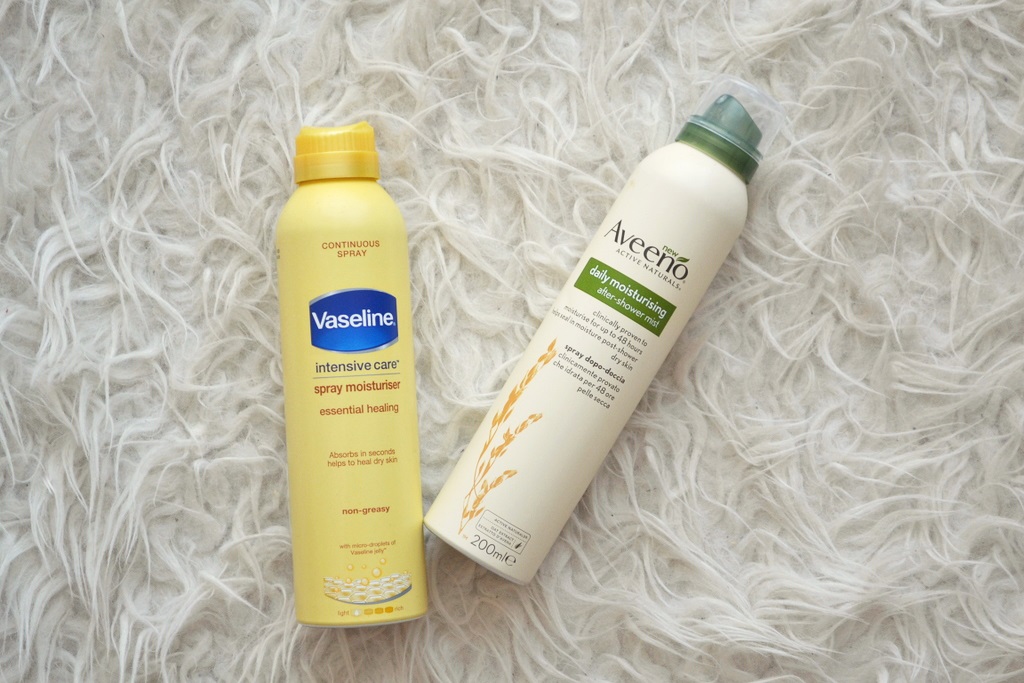
| Aveeno Daily Moisturising Body Spray | $13.49 | 200ml | Colloidal oatmeal, glycerin | 12 seconds | Itchy, sensitive skin |
| L’Occitane Almond Milk Concentrate Body Mist | $32.00 | 150ml | Almond milk, glycerin, sunflower oil | 20 seconds | Luxury feel, normal skin |
Best overall value: Nivea Nourishing Body Mist at $7.99. It absorbs fast, leaves zero residue, and the almond oil gives just enough softness for daily use. It’s not fancy, but it works.
Best for dry skin: Eucerin Advanced Hydration Body Spray. The urea is a — it gently exfoliates dead skin cells while hydrating. Your legs will feel smooth, not sticky.
Best splurge: Kiehl’s Creme de Corps Dry Oil Body Mist. It’s an oil-based mist, so it takes longer to absorb (30 seconds), but it’s the only mist that kept my shins moisturised through 8 hours in air conditioning.
How to Apply a Body Mist Correctly (Most People Get This Wrong)
You’d think spraying is foolproof. It’s not. Here are the three mistakes I see most often.
Mistake #1: Spraying on Dry Skin
Body mists work best on damp skin. Right after your shower, while your skin is still wet, spray the mist. The water on your skin helps the humectants penetrate deeper. If you spray on dry skin, the mist sits on the surface and evaporates before it can absorb.
Correct method: Pat dry with a towel until damp (not dripping), then spray from 6-8 inches away. Wait 10 seconds. Dress.
Mistake #2: Using One Spray Per Arm
Mists are diluted compared to lotions. You need more product than you think. For full body coverage, use 8-12 sprays: 2 per arm, 2 per leg, 2 on your torso, 2 on your back. The Nivea mist costs $7.99 for 200ml — at 10 sprays per use, that’s about 60 uses per bottle. $0.13 per use. Stop being stingy.
Mistake #3: Rubbing It In
You don’t need to. The formula is designed to self-distribute. Rubbing actually pushes the product into your palm instead of leaving it on your skin. If you must, pat gently with open palms. Do not massage.
Three Situations Where a Body Mist Fails — and What to Use Instead
I’m not here to sell you on mists. Here’s where they genuinely let you down.
1. Post-flight hydration. Airplane cabins have 10-20% humidity. A glycerin-based mist will pull water out of your skin. Instead, use a silicone-based spray like the Kiehl’s dry oil mist (squalane and grapeseed oil don’t depend on humidity to work). Or just bring a mini tub of La Roche-Posay Lipikar Baume AP+M.
2. After shaving your legs. Most mists contain alcohol or fragrance that sting freshly shaved skin. The Aveeno oatmeal mist is the only one I’d recommend post-shave — the colloidal oatmeal is anti-inflammatory and won’t burn. Everything else? Skip it.
3. Winter in a dry climate. If you live in Minnesota, Colorado, or anywhere with forced-air heating, a body mist alone won’t cut it from November to March. Use a mist as a quick layer, then follow with a cream on exposed areas (hands, face, shins). The Eucerin Advanced Hydration mist + a pea-sized amount of CeraVe Moisturising Cream on your shins is a solid combo.
Are Body Mists Just Expensive Fragrance Sprays?
Some are. Here’s how to tell the difference.
Check the ingredient list. A real moisturising mist will have glycerin, propylene glycol, or hyaluronic acid in the first five ingredients. A fragrance mist will list alcohol denat. or parfum first, with water and a tiny amount of glycerin near the bottom.
Examples of fragrance mists pretending to be moisturising: Bath & Body Works Fine Fragrance Mist ($7.50) — alcohol is the second ingredient. Victoria’s Secret Bombshell Body Mist ($20) — alcohol is third. These will dry out your skin over time.
Real moisturising mists: Nivea (glycerin is second ingredient), Eucerin (water, glycerin, urea — no alcohol), Kiehl’s (water, glycerin, squalane — no alcohol).
If you want a scented moisturising mist, Sol de Janeiro’s Brazilian Bum Bum Body Spray is legit — coconut oil and açaí extract are real moisturisers, and the fragrance is added after those. But at $25 for 200ml, you’re paying for the scent as much as the hydration.
What’s Next for Body Mists? The Category Is Evolving Fast
Brands are starting to solve the two biggest problems: short duration and dry-climate failure. I’m seeing three trends worth watching.
Micro-emulsion technology. Instead of water + oil, some new mists use micro-emulsions — tiny oil droplets suspended in water that penetrate deeper and last longer. The Kiehl’s dry oil mist uses this approach. Expect more brands to follow in 2026.
Ceramide-infused mists. Ceramides are the gold standard for repairing the skin barrier, but they’re thick and hard to spray. La Roche-Posay is rumoured to be testing a ceramide body mist for late 2026. If it works, it could finally make mists viable for eczema sufferers.
Customisable hydration. A few DTC brands (like Function of Beauty) are offering personalised body mists where you choose the base (light, medium, rich) and the scent. The rich base adds dimethicone, which is rare in mists but great for dry skin.
For now, body mists are a convenience product with real limits. They solve the problem of skipping moisturiser entirely, but they don’t replace a good lotion for dry skin. If you have normal skin and a busy morning, a $7.99 Nivea mist is the best time-saving beauty purchase you’ll make this year. If your skin is dry, keep a mist for quick touch-ups and a cream for the real work.